
Case 137 and Social Unrest in France: Same as it ever Was
The director of Case 137, Dominik Moll, discusses the commonalities between social movements and police repression across time.
By Jorge Ignacio Castillo
As fate would have it, Dominik Moll’s police brutality drama Case 137 is opening in North America at the same time as student protests are turning into riots across France.
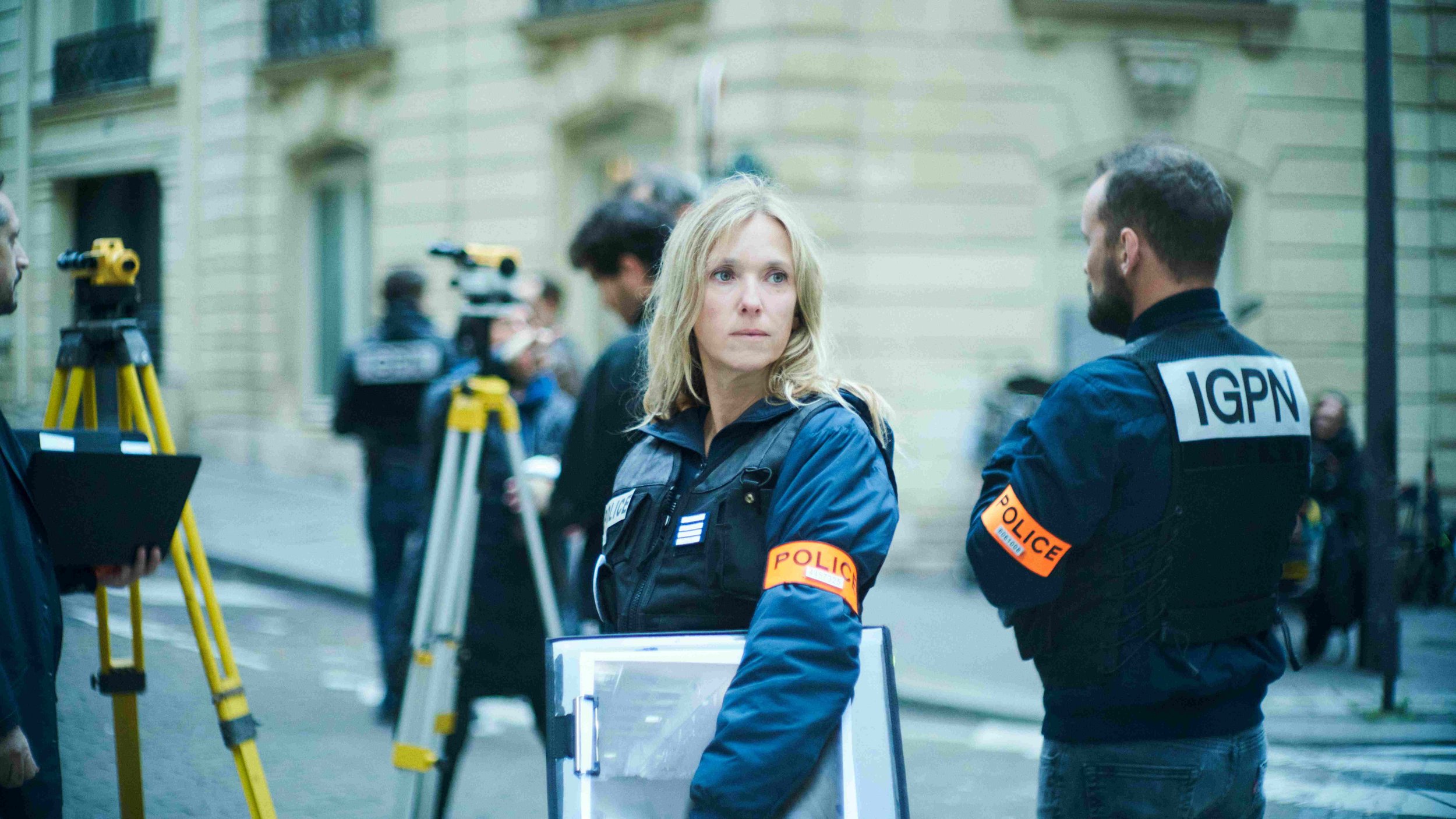
Moll’s film—his second in a row dealing with law enforcement’s inner workings after The Night of the 12th—follows Stéphanie (Léa Drucker, Close), an internal affairs officer, as she investigates the circumstances in which a young man was severely wounded during the 2018 Yellow Vest protests in Paris. The case becomes personal when she discovers that the young man and his family are from her hometown. Case 137 competed at the 2025 Cannes Film Festival and earned Drucker a César for Best Actress.
The Canadian Crew had the opportunity to talk with Moll from Paris. This interview has been edited for length and clarity.
It was wild for me to watch Case 137 as the student protests were unfolding in Paris. I can only imagine how it has been for you.
Yeah, it feels like it's starting all over again. The high school students want more teachers and better conditions, and the only answer that the government has is to send heavily armed police. Already there have been several who have been wounded, 14- and 15-year-old kids. It really depresses me that the government has no other solution because most of those kids are non-violent. You always have some people who are violent. It's a small minority, but they use that as a pretext to justify police violence, and it's the same kind of language that was being used in 2018 and 2019 during the Yellow Vest movement.
Your movie also reminded me of a situation in Chile, where, during a period of social unrest seven years ago, the police blinded several people by indiscriminately using rubber bullets. Would you say trying to preserve order necessarily leads to violence?
When you have no political answers, the only solution is to use violence. In France, with the Yellow Vest movement and now the high school movement, those problems have been there for years, but have always been pushed aside or not considered urgent. They feel like nobody listens to them, so, of course, they go onto the streets. The government panics and sends the police. If there were signs that the government listened, was open to dialogue, and wanted to find solutions together, it would be different. But modern societies are more and more about confronting each other and not trying to find solutions for everyone. And it's really problematic.
Do you think this is a systemic problem or the police's reaction depends on who's protesting?
Yes, it does. For instance, in France, there have been protests by people involved in industrial agriculture. They are not happy because, as soon as you say they can't use pesticides because they're poisoning people, they say, “But we need to work.” And when they protest, suddenly the government is quite cool with them.
Story Is King
Dominik Moll is the rare French filmmaker whose films get distributed in North America with regularity. In addition to Case 137 and the celebrated The Night of the 12th, some of us were lucky enough to see the unsettling Only the Animals. And who could forget the pitch-black thriller that launched Moll's career, With a Friend Like Harry…?
The story at the center of Case 137 could have been told from many perspectives: the perpetrators, the victim, his family. Why choose the internal affairs investigator as the central character?
For two reasons. Stéphanie (Léa Drucker's character) is at the centre of things, and she's in touch with everyone: the victims, her superiors, and the police officers being investigated. We know just as much and as little as she does. Whereas, if I had told it from the victim's point of view, I would just have theirs. Focusing on the investigator character allows me to ask questions like: Is it possible to police the police? How do you do it?
One of the things I liked about the film is that everything is at the service of the story. For example, rather than make the cinematography flashy, you employed a meat-and-potatoes approach.
I think that if it had been very flashy, it would have drawn attention away from what's really important. This kind of investigation is often not very spectacular. It's made up of little things that add up, and I find this fascinating and interesting.
We are lucky that your films get released in North America, but it's rare for French filmmakers to accomplish that. What do you think we're missing by having limited access to French cinema?
Films are windows to the world, and I think it's always enriching and important to know about other cultures, countries, and societies. But there also has to be curiosity, a desire to understand other countries better, and this is always good for mutual understanding.
I've always thought that if Donald Trump watched Iranian films, something in him may change.
He probably wouldn't understand them. And he would complain, “They don't even speak English.”
Case 137 will open in Canadian cinemas in the fall and will be available on demand on December 4.